
Sybra
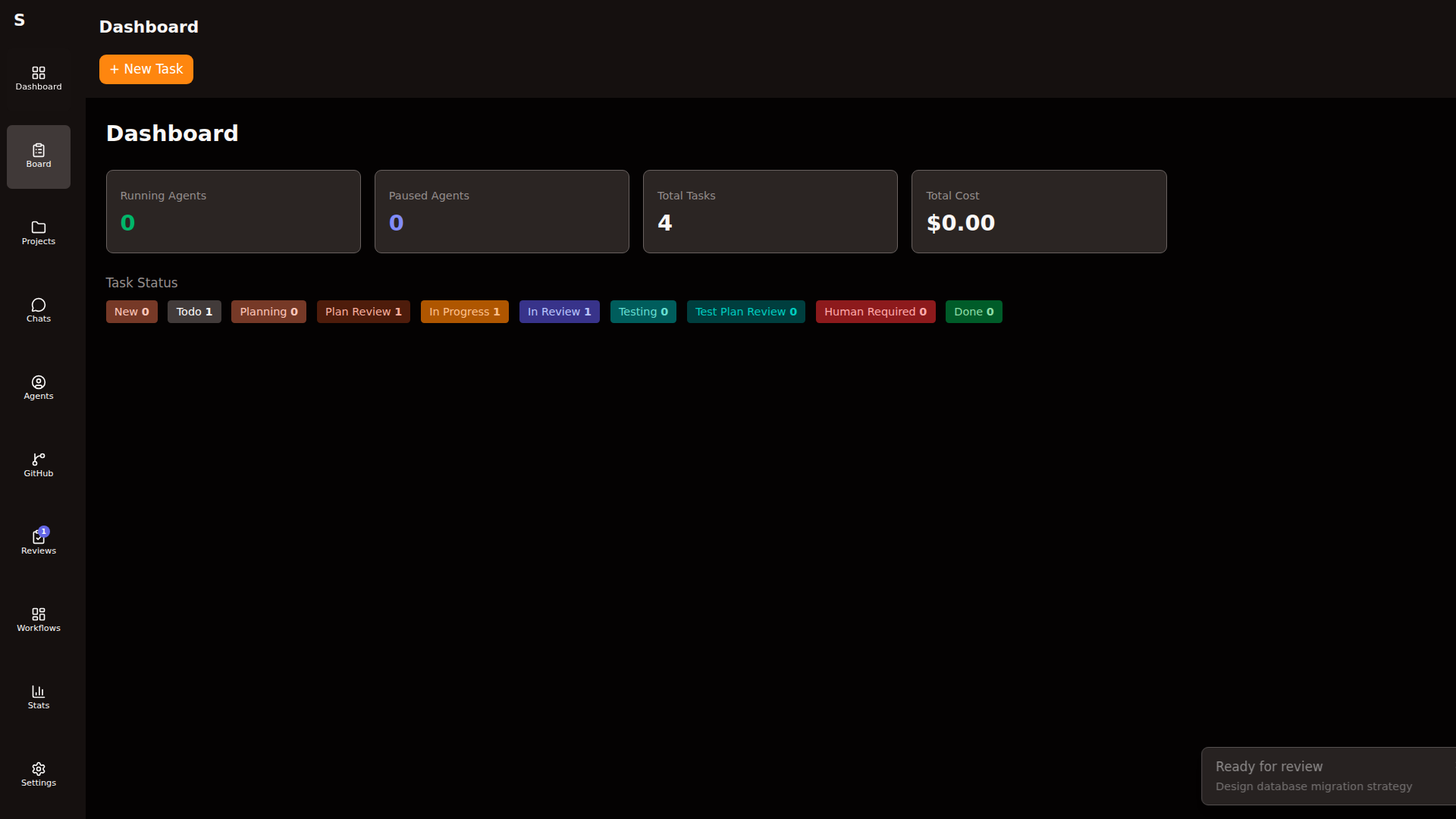
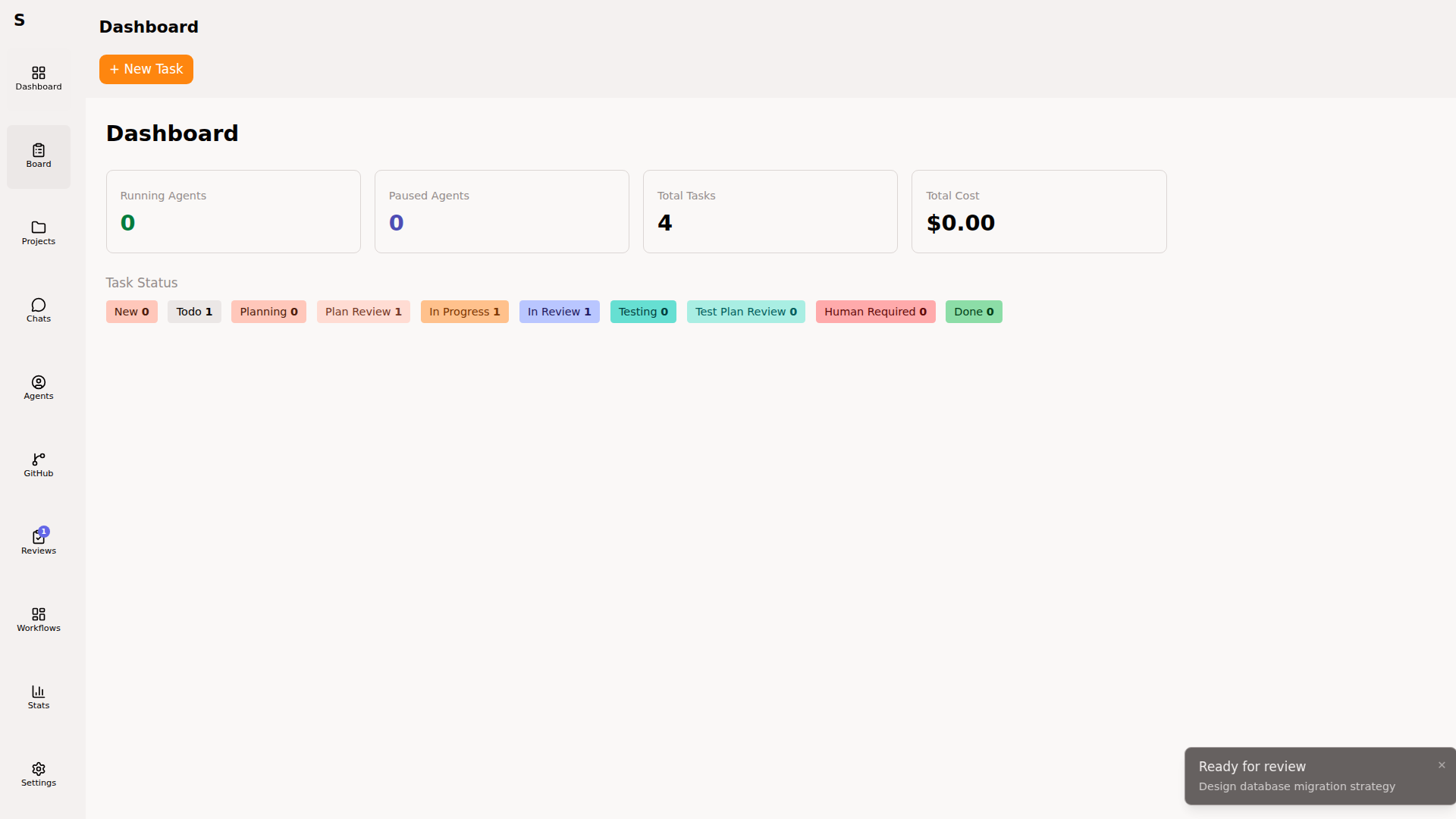
Sybra is a local desktop app that runs a swarm of Claude Code agents against your own repositories. Tasks live as markdown files on disk. Agents run headlessly via claude -p or interactively inside tmux. The whole loop — triage, plan, dispatch, review — is yours to automate or drive by hand.
What you get
Section titled “What you get”- Kanban task board backed by plain markdown files. Git-tracked. Diff-friendly.
- Two agent modes: interactive (tmux) for conversational work, headless (
claude -p) for scripted work. - Per-task git worktrees. Each agent gets its own checkout, cleaned up on completion.
- Orchestrator brain. A Claude Code session that triages, plans, dispatches, and monitors the swarm.
- GitHub integration. Issues feed the board. PRs, reviews, and Renovate CI live in-app.
- Workflows. A visual DAG editor for multi-step pipelines (plan → review → fix → merge).
- Loop agents. Cron-like recurring headless jobs with full cost tracking.
- Per-machine routing. Run Sybra on a laptop and a server simultaneously, route work by project type.
Who it’s for
Section titled “Who it’s for”You already use Claude Code. You want one place to see what every agent is doing, what it cost, where it’s stuck, and what’s next — without a VC-funded SaaS in the loop.
How tasks move
Section titled “How tasks move”new → todo → in-progress → in-review → done ↑ (planning → plan-review) — for tasks needing architect-level review firstTasks enter through GitHub issues, Todoist, the CLI, the Quick-Add hotkey, or the task board. The orchestrator picks them up, picks a mode, picks a provider, and runs.
Where to go next
Section titled “Where to go next”- New here? → Getting started (5 minutes, you run a real agent)
- Mental model? → Tasks and agents
- Just reference? → CLI · Config · Shortcuts
Related
Section titled “Related”- Source:
github.com/Automaat/sybra - The app embeds a Wails v2 GUI.
mise run devhot-reloads both Go and Svelte.